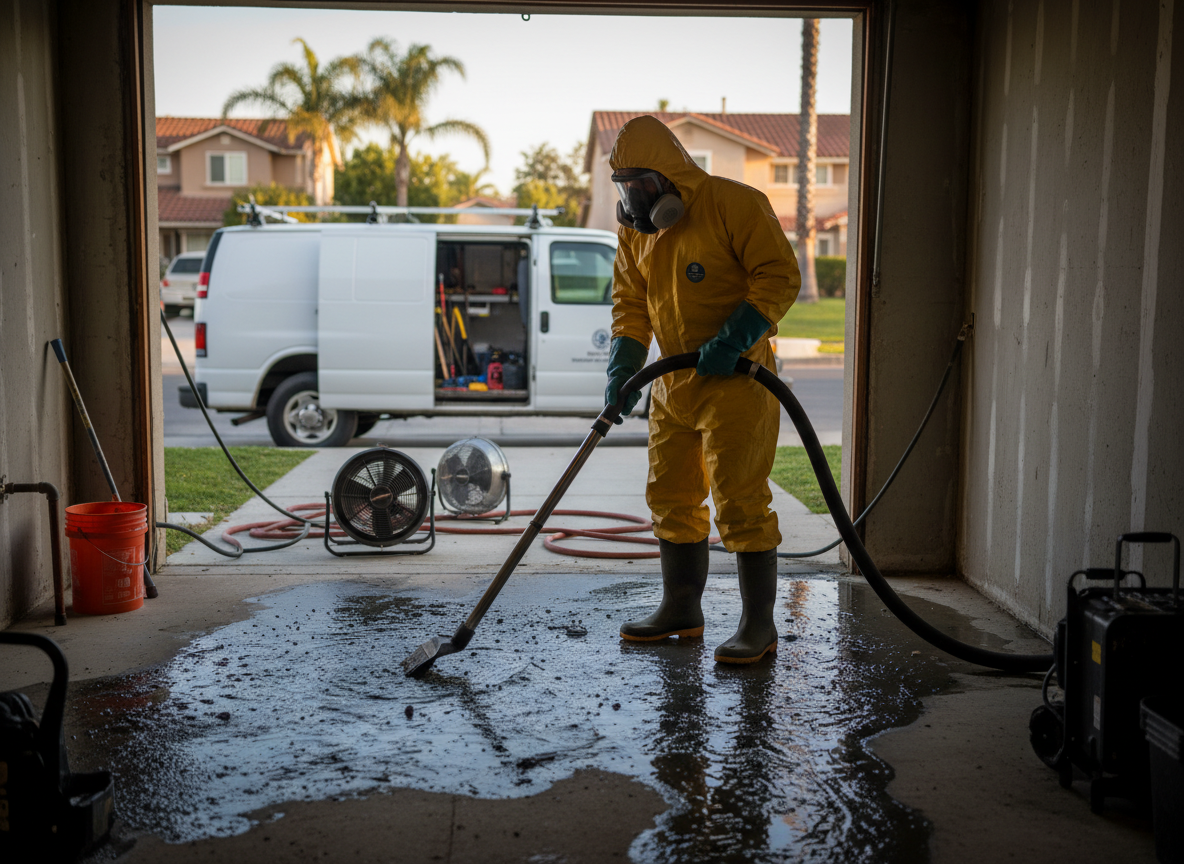
Sewage backups in Downey often stem from clay soils and 1950s-era cast iron lines common around Rancho Los Amigos and near the Rio Hondo Golf Club. These pipes corrode over decades, and mild winter rains push roots or grease clogs past capacity. Technicians must treat every site as a Category 3 biohazard, wearing full PPE and using negative air machines to keep contaminants from drifting into living spaces. Los Angeles County health codes require documented removal of all affected porous materials like carpet pad and drywall below the flood line.
Hot summer temperatures accelerate bacterial growth on standing water, so crews extract liquid within hours and apply EPA-registered disinfectants before any drying begins. In neighborhoods bordering Norwalk and Bell Gardens, slab-on-grade homes trap moisture under the concrete, demanding moisture meters and targeted demolition to prevent hidden mold. Failure to reach hidden pockets leads to repeat odors and failed inspections from the county.
After extraction, air movers and dehumidifiers run until wood and drywall read below 12 percent moisture. Final clearance includes ATP swab testing to confirm bacterial reduction before any reconstruction. Homeowners along Lakewood Boulevard often discover the issue only after sewage reaches the Columbia Memorial Space Center parking area during heavy storms, requiring coordinated traffic control for equipment trucks.
Technician insight
In Downey, the thing that catches most people out with Sewage Cleanup is the heavy clay soil around Rancho Los Amigos that holds water for days after even light rain, so basements and slabs stay damp long after the visible sewage is gone unless crews pull baseboards and run dehumidifiers on the concrete itself.
Sewage Backup Near Rio Hondo Golf Club
A homeowner in a 1958 Downey house noticed water rising from a floor drain after a winter storm. We found the line had failed under the slab and sewage had wicked into the subfloor toward the backyard. Crews isolated the room, extracted the liquid, removed the contaminated sections of flooring, and dried the concrete for four days before clearance testing passed.
How it works
- 1
Site Assessment
Technicians arrive within the hour, map the contamination zone, and test for hidden moisture in walls and under slabs typical of Downey homes.
- 2
Containment and Extraction
Plastic barriers isolate the area while pumps and wet vacuums remove standing sewage, preventing spread to unaffected rooms.
- 3
Cleaning and Disinfection
All surfaces receive hospital-grade antimicrobials followed by HEPA air scrubbing to meet Los Angeles County health standards.
- 4
Drying and Verification
Industrial drying equipment runs until moisture levels stabilize, then ATP testing confirms the space is safe for re-entry.
Pricing
Pricing varies by square footage affected, depth of contamination, and whether slab or crawlspace access is required.